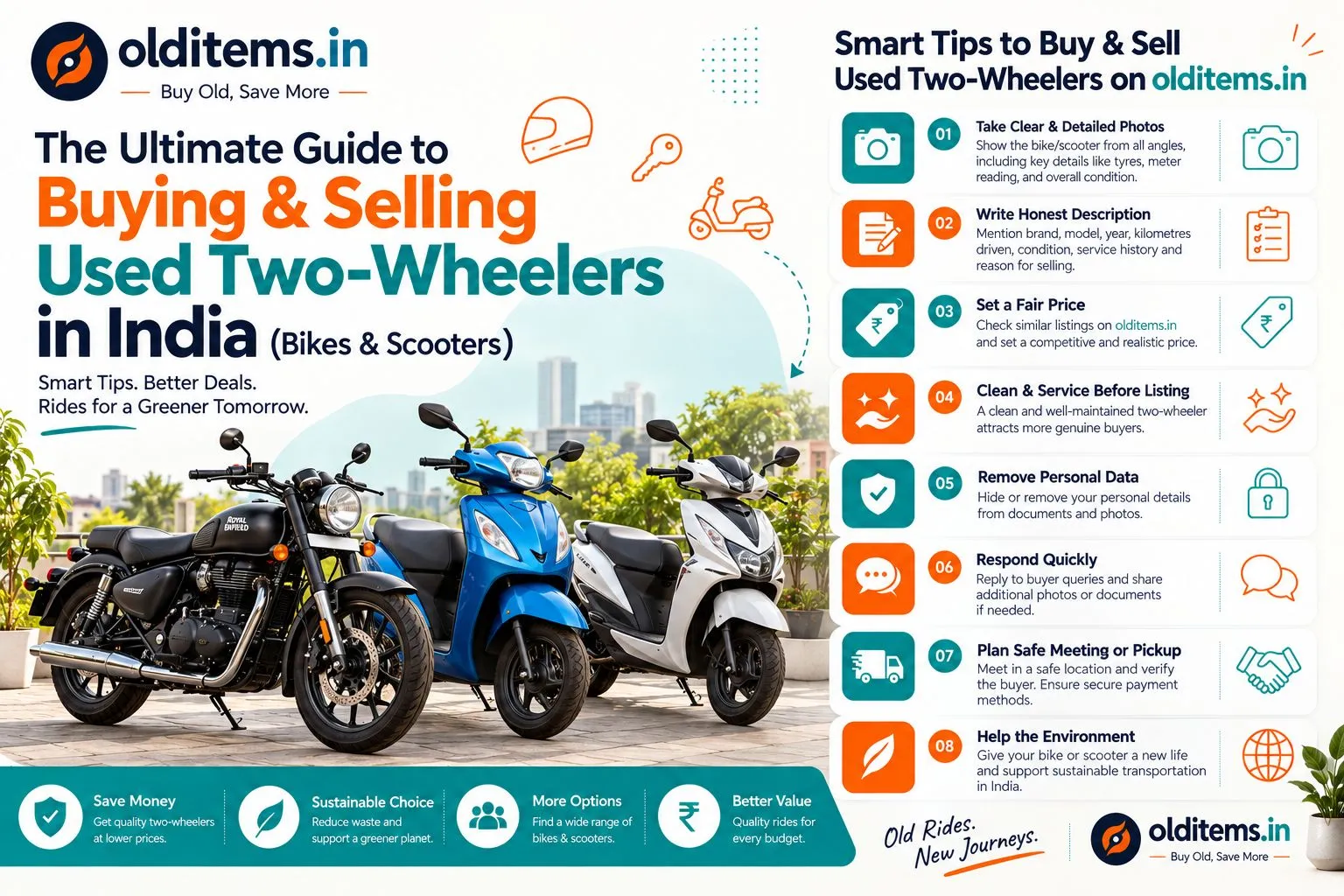
The Ultimate Guide to Buying & Selling Used Cars in India

Buying or selling a pre-owned car is one of the biggest financial decisions most of us make after buying a home. The Indian second-hand car market is booming—and for good reason. Buying pre-owned lets you skip steep first-year depreciation, upgrade to a higher segment vehicle within your budget, and save significantly on road tax and insurance premiums on India's trusted free classifieds marketplace.
On the flip side, selling a car privately can unlock far better value than accepting lowball trade-in offers from dealerships.
However, whether you are on the buying side or the selling side, dealing with high-value assets like cars comes with unique challenges—from spotty service records and meter tampering to complex RTO paperwork.
Here is your complete, practical roadmap to buying or selling a pre-owned car smoothly, safely, and at the right price.
PART 1: THE BUYER’S GUIDE – How to Buy a Used Car Without Regrets
Buying a pre-owned vehicle doesn't have to feel like a gamble. Following a systematic inspection routine eliminates 90% of potential headaches.
1. Set a Realistic Budget (Beyond the Sticker Price)
When planning your budget, remember that the purchase price isn't your only expense. Always set aside 10% to 15% of your total budget for:
RTO transfer fees and agent/state taxes.
Immediate post-purchase servicing (engine oil change, filter replacements, fluid top-ups).
Potential wear-and-tear items (new tires, brake pads, or battery).
Insurance transfer or fresh policy purchase.
2. Inspect the Exterior & Body Structure
Check Panel Gaps: Uneven gaps between the hood, doors, or boot lid often indicate past accidents and poor repair work.
Look for Repainted Areas: Inspect the car in broad daylight. Look for slight color mismatches across panels, overspray on rubber door seals, or wavy reflections along the doors.
Inspect for Rust: Pay close attention to wheel arches, door sills, under-chassis rails, and the spare tire well in the boot.
3. Conduct a Cold Engine & Mechanical Inspection
Always request the seller to keep the engine cold before you arrive. A warm engine can hide starting trouble or underlying mechanical noises.
Under the Hood: Check for oil leaks around the head gasket, low coolant levels, or brittle hoses. Remove the oil filler cap—if you see milky residue or white sludge, walk away immediately (this indicates coolant leaking into the engine block).
Exhaust Smoke: Have someone rev the engine slightly while you watch the tailpipe. Blue smoke indicates burning engine oil; thick black smoke indicates fuel mixture issues; dense white smoke suggests coolant burning.
Tires & Suspension: Check tread depth evenly across all four tires. Uneven tire wear points to improper wheel alignment or worn-out suspension bushings. Push down heavily on each corner of the car—it should bounce back once and settle immediately without extra swaying.
4. Take a Comprehensive Test Drive
Turn off the music system and open windows slightly during the test drive to hear subtle sounds:
Clutch & Gearbox: The clutch pedal should feel smooth without excessive stiffness or slippage. Gears should slot in crisp without grinding noises.
Brakes: Apply brakes firmly at safe speeds. The vehicle should stop in a straight line without pulling to one side or making squealing metal noises.
Steering & Alignment: On a flat road, gently release the steering wheel—the car should keep driving straight without veering off.
5. Verify Paperwork & History
Never hand over payment without cross-checking these vital documents:
Original RC (Registration Certificate): Verify the chassis and engine numbers stamped on the car body match the RC exactly. Check if it’s a 1st, 2nd, or 3rd-owner car.
Service History & Odometer: Check the official brand service logbook or digital service records. Match the mileage recorded during the last service against the dashboard reading to ensure the odometer hasn't been tampered with.
Insurance & PUC: Check if the active insurance is Comprehensive or Third-Party only. Ensure the Pollution Under Control (PUC) certificate is current.
Pending Fines / Challans: Run the registration number on the official Parivahan portal or mParivahan app to verify there are no unpaid traffic challans or legal disputes.
PART 2: THE SELLER’S GUIDE – How to Sell Your Car Fast for Top Rupee
If you are putting your car up for sale, presenting it right and having your paperwork organized will help you close deals quickly without unsupportable lowball offers.
1. Deep Clean and Fix Minor Flaws
First impressions heavily dictate how much buyers are willing to offer.
Professional Detailing: Spend a small amount on an interior foam cleaning, dashboard polishing, and an exterior wash & wax. A clean car signals to buyers that the vehicle was well-maintained.
Fix Minor Niggles: Replace blown light bulbs, fix broken wiper blades, top up fluids, and repair loose interior trim pieces. These small fixes prevent buyers from deducting large amounts during negotiations.
2. Organize All Documentation upfront
Having a complete document folder ready builds instant trust:
Original Registration Certificate (RC).
Valid Insurance Policy & PUC Certificate.
Complete Service Bills / Authorized Service Center history.
Original spare key, owner's manual, and warranty cards (if applicable).
Bank NOC (No Objection Certificate): If your car was financed via an auto loan, ensure you have cleared the hypothecation with your bank and obtained Form 35 along with the official NOC.
3. Price It Smartly
Do a quick market scan of similar make, model, year, and mileage cars in your city. Understand local value trends:
Petrol vs. Diesel vs. CNG: Factor in regional fuel policies (e.g., age limits on diesel vehicles in specific metro zones).
Single Owner Premium: 1st-owner cars fetch 10% to 15% higher resale value than multi-owner cars.
Price with Bargain Room: List your car slightly above your final walk-away price to give buyers room to negotiate without dipping below your target figure.
4. Take Detailed, High-Res Photographs
Clear photographs attract serious buyers faster. Take shots in natural morning or evening light:
Full exterior shots from 4 angles (front, back, left side, right side).
Close-up of tires showing tread depth.
Dashboard view showing total kilometer reading on the odometer.
Clean interior seats, rear legroom, boot space, and clean engine bay.
PART 3: RTO Paperwork & Safe Transfer Practices
Ownership transfer is the most critical phase of buying or selling a used vehicle in India. Failing to transfer ownership properly leaves the seller legally liable for future traffic violations or accident liabilities, while leaving the buyer without legal proof of ownership.
Mandatory RTO Forms Checklist:
Form 29: Notice of transfer of ownership (Signed by seller).
Form 30: Application for intimation and transfer of ownership (Signed by both buyer and seller).
Form 28: Application for No Objection Certificate (Required if moving the car to a different RTO jurisdiction or state).
Form 35: Termination of Hypothecation (Required if clearing an active bank car loan).
Golden Rules for Handover Safety:
Never Hand Over Keys Without Full Payment: Always confirm that the full agreed amount is credited into your bank account via UPI, IMPS, or NEFT before handing over keys and original documents.
Sign a Delivery Receipt: Both parties should sign a clear car delivery receipt noting the exact date, time (hour and minute), agreed price, kilometer reading, and signatures of two witnesses. Review how direct buyer-seller handovers work for smooth peer-to-peer deals.
Track the RC Transfer: Sellers should keep copies of signed Form 29 & 30 and track the status until the new buyer's name reflects on the Parivahan portal.
Safety Guidelines for In-Person Car Deals
When meeting potential buyers or sellers for test drives and negotiations, follow our core buyer and seller safety tips:
Meet in Safe Public Spots: Always pick broad daylight hours in well-trafficked areas—such as mall parking lots, fuel stations, or metro station pickup areas.
Accompany Test Drives: If you are selling, never let a buyer take the car for a test drive alone. Sit in the passenger seat and bring a friend along.
Beware of Advance Payment Scams: Never transfer advance token fees, online reservation charges, or shipping deposits without inspecting the car and meeting the owner in person.
Clearing Out Other Items Before a Move?
If you are upgrading your car as part of a home relocation, lifestyle change, or decluttering drive, check out our other helpful guides:
Selling Home Goods? Learn how to sell pre-owned furniture online quickly without transport headaches.
Upgrading Electronics? Read our guide on how to get maximum resale value for old mobile phones and laptops.
Securing Your Data: Check how to safely wipe your laptop or phone before selling.
Home Upgrades: Read our 7-point checklist for buying a used Smart TV or compare Refurbished vs. Second-Hand Laptops.
Ready to Find Your Next Car or Sell Your Current Ride?
Whether you are looking for an affordable hatchback for daily city commutes or putting your pristine sedan up for sale, connecting directly with local buyers and sellers makes all the difference.
Post a free ad today on Olditems.in to reach verified buyers in your city, or feel free to contact our support team for any queries!
Frequently asked questions
Comments
Leave a comment
Your email is never published. Comments appear after moderation.